


Dubai has long been recognized as a leading global business destination, attracting entrepreneurs and investors with its strategic location, modern infrastructure, and business-friendly policies. With the implementation of the UAE Corporate Tax, companies operating in Dubai must now understand the applicable tax framework and compliance obligations.
This article provides a detailed overview of corporate tax rates in Dubai, their impact on different types of businesses, and the key requirements for maintaining compliance while optimizing financial planning.
What is corporate tax in Dubai?
Corporate tax is a levy imposed on the net profits earned by businesses operating within the UAE, including Dubai. The introduction of this tax system reflects the UAE’s commitment to aligning with international tax standards while preserving its competitive business environment.
The framework is designed to promote transparency, support economic growth, and ensure a fair taxation system for businesses of varying sizes.
Understanding corporate tax rates in Dubai is crucial for companies seeking to manage their financial responsibilities effectively.
Overview of Corporate Tax Rates in Dubai
The UAE corporate tax regime follows a straightforward structure:
- 0% corporate tax on taxable profits up to AED 375,000
- 9% corporate tax on taxable profits exceeding AED 375,000
This approach supports startups and small businesses while ensuring larger organizations contribute to the country’s economic development.
A clear understanding of corporate tax rates in Dubai enables businesses to make informed financial decisions and prepare for future tax obligations.
Purpose Behind the Introduction of Corporate Tax
The UAE introduced corporate tax to achieve several strategic objectives, including:
- Enhancing economic sustainability
- Encouraging responsible business practices
- Aligning with global tax standards
- Increasing transparency and accountability
As corporate taxation becomes an integral part of the business landscape, knowledge of corporate tax rates in Dubai is increasingly important for business owners and investors.
Which Businesses Are Subject to Corporate Tax?
The applicability of corporate tax rates in Dubai depends on the nature and structure of the business.
Mainland Businesses
Companies operating on the mainland are generally subject to corporate tax based on their taxable income.
Free Zone Entities
Certain free zone companies may continue to enjoy tax benefits if they satisfy the relevant qualifying criteria.
Foreign Businesses
Foreign companies with a permanent establishment or taxable presence in Dubai may also be required to pay corporate tax.
Entrepreneurs and Freelancers
Independent professionals and small business owners may be subject to corporate tax depending on their earnings and business activities.
Understanding whether your business falls within the scope of corporate tax rates in Dubai is essential for compliance.
Advantages of Understanding Corporate Tax Rates in Dubai
Being familiar with corporate tax rates in Dubai offers several benefits:
Enhanced Financial Management
Businesses can prepare accurate budgets and financial forecasts.
Regulatory Compliance
Proper understanding helps companies meet legal obligations and avoid penalties.
Increased Credibility
Tax-compliant organizations often gain greater trust from investors, clients, and stakeholders.
Strategic Business Planning
Knowledge of tax liabilities supports better decision-making and long-term growth strategies.
Overall, understanding corporate tax rates in Dubai contributes to stronger financial stability and business success.
Required Documents for Corporate Tax Compliance
Businesses should maintain the following documents to meet corporate tax requirements:
- Trade license
- Passport and Emirates ID copies
- Financial statements
- Incorporation certificates and company documents
- Banking information
- Accounting and bookkeeping records
Maintaining organized records simplifies compliance with corporate tax rates in Dubai and related regulations.
Corporate Tax Filing Requirements
To comply with corporate tax rates in Dubai, businesses should:
- Keep accurate accounting records
- Submit tax returns within the prescribed deadlines
- Calculate taxable profits correctly
- Pay any tax liabilities on time
Failure to fulfill these obligations may result in fines, penalties, or other regulatory actions.
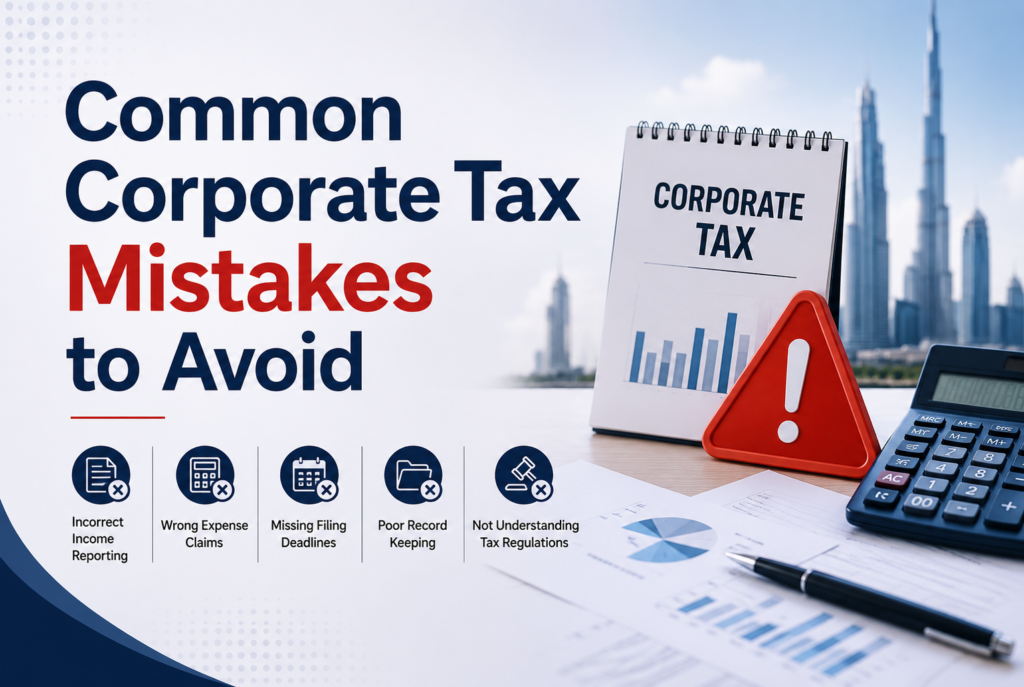
Common Corporate Tax Mistakes to Avoid
Common Challenges Businesses Face
Businesses often encounter several challenges when managing their tax obligations. Common mistakes include:
- Reporting inaccurate financial information
- Missing filing deadlines
- Maintaining incomplete accounting records
- Neglecting financial and tax planning
- Overlooking regulatory requirements
Avoiding these errors can help businesses maintain smooth operations, improve financial accuracy, and reduce compliance risks.
Why Professional Tax Assistance Matters
Many organizations choose to work with experienced tax and accounting professionals to ensure compliance and efficient financial management. Professional advisors can assist with:
- Tax calculations and assessments
- Regulatory compliance support
- Financial reporting and documentation
- Strategic financial planning
Expert guidance helps businesses reduce risks, maintain accurate records, and meet their legal obligations with confidence.
Corporate Tax and Business Expansion
A strong understanding of corporate tax rates in Dubai can support business growth and profitability. Effective tax planning allows companies to:
- Reinvest profits strategically
- Expand operations confidently
- Improve cash flow management
- Strengthen investor confidence
Businesses that proactively manage their tax obligations are often better positioned for long-term success.
How NAK Auditing Supports Businesses in Dubai
Navigating the UAE corporate tax system can be challenging without expert assistance. NAK Auditing provides comprehensive tax and accounting solutions tailored to businesses across various industries.
Services offered by NAK Auditing include:
- Corporate tax registration
- Tax compliance and advisory services
- Accounting and bookkeeping support
- Audit and financial reporting
- VAT consultation and assistance
With a team of experienced professionals, NAK Auditing helps businesses stay compliant with UAE regulations, maintain accurate financial records, and manage their tax obligations efficiently and maintain full compliance with UAE regulations.
Conclusion
Corporate taxation is now an essential part of doing business in the UAE. A clear understanding of tax regulations helps businesses maintain compliance, improve financial planning, and make informed decisions for long-term growth.
By staying updated with regulatory requirements and ensuring accurate tax reporting, companies can reduce risks, avoid penalties, and operate with greater confidence in a competitive market.
For businesses looking for professional support, NAK Auditing offers expert tax, accounting, bookkeeping, and compliance services tailored to UAE regulations. Our experienced team is committed to helping organizations meet their obligations efficiently while focusing on sustainable business success.
FAQS
Businesses pay 0% tax on taxable income up to AED 375,000 and 9% on taxable income exceeding that amount.
Most businesses are subject to corporate tax, although certain qualifying free zone entities may receive tax benefits.
Yes. However, smaller businesses benefit from the 0% tax rate on taxable income up to AED 375,000.
Corporate tax is calculated based on taxable profits after considering eligible deductions and adjustments.
Businesses that fail to comply may face penalties, fines, and other legal consequences.
While not mandatory, professional assistance can help ensure accurate calculations and regulatory compliance.
Social Profiles